
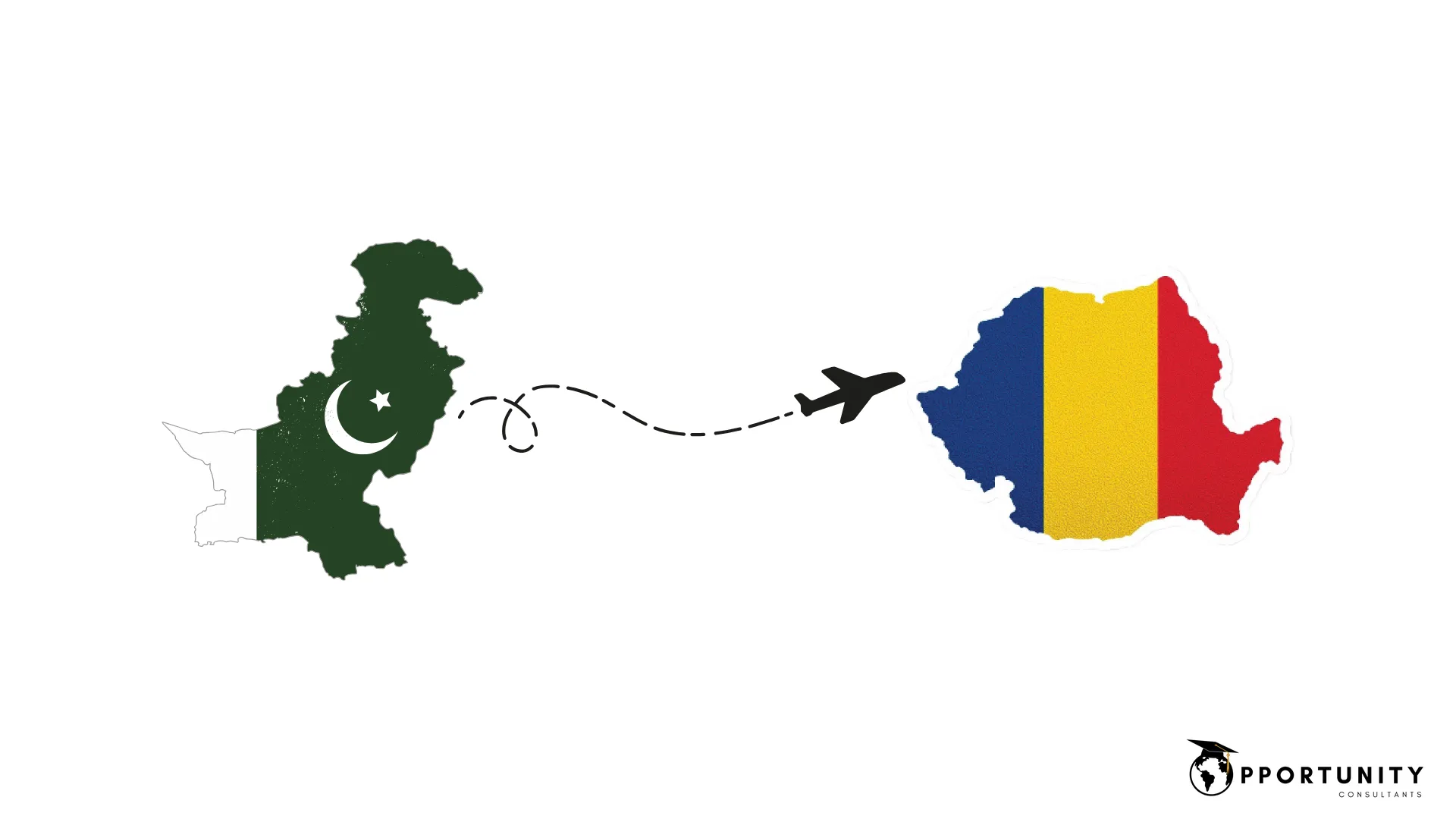
In November Romania became the part of European Union which means that anyone with a Romanian Visa can visit AND explore the entire EU. For students, it a good opportunity since Romania offers one of the lowest tuition fee and living expense in entire EU. We provide you with an in-depth guide starting from document preparation to arrival in Romania. Let’s get started:
- Basic Information Regarding Romania That You Should Know
- Intakes, Application Dates & Deadlines
- Documents Required For Application
- Step-By-Step Guide
- Step 1a: Getting Your Documents Ready For University Application
- Step 2a: Apply for Major Scholarships
- Step 2b: Research Romanian Universities & Programs
- Step 3a: University Application & Pre-Enrollment
- Step 3b: Translation & MOFA Apostille (Critical Step)
- Step 3c: Obtaining CNRED Recognition/Ministry Letter of Acceptance
- Step 3d: Getting Your Bank Statement Ready
- Step 4: Request Documents from the University
- Step 5: Apply for Police Character Certificate (PCC)
- Step 6: Prepare Accommodation & Other Visa Documents
- Step 7: Book Visa Appointment
- Step 8: Applying For a Student Type D/SD Visa
- Step 9: Pre-Departure Preparation
- Step 10: Arrival in Romania & Enrollment
- Understanding Living Costs & Budgeting
- Complete Timeline Summary (6–9 Months)
- Reasons for Visa Rejection & How to Avoid Them
- Tips for Success
- Key Contact Information
- Conclusion
Basic Information Regarding Romania That You Should Know
Romania has:
- One of the cheapest education in the EU (€2,500–€6,300 annually)
- One main intake (Fall/October) with a limited Spring intake
- Very affordable cost of living (€300–€500/month)
- Accepts a CGPA as low as 50% for applications
- Accepts the MOI (Medium of Instruction) certificate as proof of English proficiency
- Requires Bank Statement of €3,500–€6,000 for one year (significantly lower than many EU countries)
- 90-day study visa valid immediately upon issuance (no waiting period)
- Quick residence permit conversion within 2-4 weeks after arrival
- Part-time work allowed (6 hours/day during semester, full-time during breaks)
- Very high visa success ratio (approximately 90% for Pakistani students), 99% via Us
Advantages for Pakistani Students:
- No IELTS/TOEFL strictly required if prior studies were in English
- Fast visa processing compared to other EU countries (45–60 days)
- Relatively simple document requirements compared to other EU destinations
- Living cost under €400 monthly and accomodation as low as €80 a month
- Quick residence permit issuance upon arrival
- Strong international recognition of Romanian degrees
- Excellent universities with programs in English, French, and Romanian
- Very welcoming to Pakistani students with established communities
Challenges & Issues with Romania For Pakistani Students:
- Limited visa appointment slots (though less problematic than Italy/Spain)
- Ministry of Education Letter of Acceptance is mandatory (issued by DGRIAE)
- Limited Spring intake opportunities (mostly Fall/October intake)
- Document translation and apostille requirements
- A residence permit must be applied for within 90 days of arrival
- Need for medical insurance (€30,000+ coverage)
Intakes, Application Dates & Deadlines
| Intake | Application Opening | Application Closing | Letter of Acceptance Issued | Visa Processing | Academic Year Start |
|---|---|---|---|---|---|
| Fall Intake (Main) | March–April | May–July | August–September | June–September | October 1 |
| Spring Intake (Limited) | November–December | December–January | January–February | December–February | February 1 |
Key Timeline Notes:
- For Fall 2025 Intake: Apply by May–July 2025 at the latest
- For Spring 2026 Intake: Apply by December–January 2026 at the latest
- Non-EU/EEA students must apply at least 6 months in advance to allow time for Ministry of Education approval and visa processing
- It is better to apply 8–9 months earlier for smoother processing
Documents Required For Application
Complete Checklist (University Application + Student Visa Application)
| ✔️ | Document / Requirement | For University Application | For Student Visa Application | Notes |
|---|---|---|---|---|
| ☐ | Passport | ✔️ | ✔️ | Valid for at least 18 months beyond the intended stay |
| ☐ | Passport-size Photographs | ✔️ | ✔️ | 2 recent color photos (3×4 cm, white background) |
| ☐ | University Application Form | ✔️ | – | Obtained from the university website or the international relations office |
| ☐ | Visa Application Form | – | ✔️ | Get it from embassy’s website |
| ☐ | Educational Degrees & Transcripts | ✔️ | ✔️ | Attested by IBCC/HEC and MOFA; translated into English or Romanian |
| ☐ | Letter of Acceptance (from Ministry of Education) | – | ✔️ | Official letter issued by DGRIAE confirming admission |
| ☐ | Language Proficiency Certificate | ✔️ | – | IELTS/TOEFL/CILS/CELI (optional if prior education was in English; MOI letter accepted) |
| ☐ | Motivation Letter / Statement of Purpose | ✔️ | ✔️ | Explains reasons for studying in Romania |
| ☐ | Letter(s) of Recommendation (LOR) | ✔️ (if required) | – | Usually 1–2 letters from previous instructors |
| ☐ | Curriculum Vitae (CV) / Resume | ✔️ | Sometimes | Updated CV with academic and professional history |
| ☐ | Proof of Financial Means | – | ✔️ | Bank statement (6 months), sponsor affidavits, salary slips, tax returns; minimum €2,500–€3,000 |
| ☐ | Tuition Payment Receipt / Scholarship Letter (in case of scholarship) | ✔️ | ✔️ | Issued by the Ministry of Education, Directorate General (DGRIAE) |
| ☐ | Proof of Accommodation | – | ✔️ | University hostel letter, rental agreement, or Declaration of Hospitality (Dichiarazione di Ospitalità) |
| ☐ | Flight Reservation | – | ✔️ | Confirmed or dummy flight booking (embassy-compliant) |
| ☐ | Health / Medical and Travel Insurance | – | ✔️ | Minimum €30,000 coverage valid for one academic year |
| ☐ | Birth Certificate | ✔️ | ✔️ | Original or certified copy; apostille by MOFA |
| ☐ | Police Character Certificate | – | ✔️ | Recent (within 3 months of visa application); apostille by MOFA |
| ☐ | Computerized National ID (CNIC) | ✔️ | ✔️ | Photocopy; attested if required |
| ☐ | Visa Application Form | – | ✔️ | Type D/SD form for long-stay studies; filled, signed, and dated |
| ☐ | Visa Fee Payment Receipt | – | ✔️ | Proof of €120 visa fee payment (non-refundable) |
| ☐ | Document Translations | Varies | ✔️ | Any related document that is not in English or Romanian |
| ☐ | Document Apostilles / MOFA Apostille | Partial | ✔️ | All non-English/Romanian documents translated into English or Romanian by a certified translator |
Step-By-Step Guide
Overall Process Time: 6–9 months
Step 1a: Getting Your Documents Ready For University Application
Process Time: 1-2 weeks
Obtaining Original Documents
For Bachelor’s Degree Applicants:
- Obtain original transcripts and certificates of Matriculation (10th grade) and Intermediate/FSC (12th grade) from your regional board office
- If you’ve completed O-Levels or A-Levels, obtain original transcripts from your school/college
- Obtain a Medium of Instruction (MOI) letter or English proficiency certificate from your school/college confirming that your education was conducted in English
- Alternatively, provide an IELTS Academic score (minimum 5.5–6.0 for Bachelor’s)
For Master’s Degree Applicants:
- Obtain all Bachelor’s degree original documents (diploma and transcript)
- Obtain your Bachelor’s transcript with grades from your university
- Obtain an MOI letter or English proficiency certificate from your Bachelor’s institution
- Alternatively, provide an IELTS Academic score (minimum 6.0–6.5 for Master’s)
For PhD Applicants:
- Obtain Master’s degree diploma and transcript
- Obtain Bachelor’s degree diploma and transcript
- Obtain MOI letters from both institutions
Additional Documents (All Levels):
- Obtain 1-2 Letters of Recommendation (LORs) from your last educational institution (teachers, professors, or head of institution)
- Prepare a highly motivational Statement of Purpose (SOP) / Motivation Letter explaining your career goals and reasons for choosing Romania
- Prepare your Curriculum Vitae (CV) with academic and professional history
- Obtain your valid passport (must be valid for at least 18 months beyond your intended stay)
- Obtain recent passport-sized photographs (4 color photos, 3×4 cm, white background)
- Certificates, awards, achievements, research publications (if applicable)
Important Note:
For Pakistani students applying to Romanian universities, you do not need IELTS/TOEFL if:
- Your previous education (high school or Bachelor’s) was conducted in English, AND
- You provide an MOI (Medium of Instruction) letter from your educational institution
However, submitting an IELTS Academic score (6.0+ for Bachelor’s, 6.5+ for Master’s) strengthens your application, especially if your CGPA is borderline.
Getting Attested Via IBCC & HEC
For Matriculation & Intermediate:
- Get your original Matric and Intermediate transcripts and certificates attested at IBCC (Inter-Board Committee of Chairmen) office in your province
- If you have O-Levels or A-Levels, get them equivalence certificates from IBCC first, then get them attested
- Note: You do not need to attest the original O/A-Level certificates separately; only the equivalence certificate needs attestation
For Bachelor’s Degree:
- Get your Bachelor’s degree and transcript attested at HEC (Higher Education Commission) office
- HEC attestation can be done online or in person
For Master’s Degree:
- Get your Master’s degree and transcript attested at HEC
IMPORTANT: Document Translations
Unlike Italy, translations are needed for both university and visa applications in Romania. All non-English documents must be translated into English or Romanian by a certified translator and then apostilled by MOFA.
Process Timeline:
- IBCC Attestation: 3–7 working days (normal), 1–2 working days (urgent)
- HEC Attestation: 3–7 working days (normal), 1–2 working days (urgent)
- Translation: 3–7 working days (normal), 1–2 working days (expedited)
- MOFA Apostille: 7–14 working days (normal), 3–5 working days (urgent)
Pro Tip: Start attestation and translation as soon as possible; this is often the bottleneck in the process.
Step 2a: Apply for Major Scholarships
Before applying to a university, a scholarship request must be applied for because its deadline is earlier. Romania has three scholarships to cover tuition fees and a stipend.
- Ministry of Foreign Affairs (MAE) – The main scholarship awarding authority of Romania. Romanian language only.
- Erasmus+ – Similar to EU countries, given to students studying in Romania. Highly competitive
- Independent University Scholarships – Given by each university individually. Usually applicable to the tuition fee
Step 2b: Research Romanian Universities & Programs
Process Time: A Few Days – 1 Week
- Identify universities and programs matching your field of study and academic level
- Popular Universities for Pakistani Students:
- University of Bucharest (best for humanities, social sciences, business)
- Carol Davila University of Medicine and Pharmacy (excellent medical programs)
- Politehnica University of Bucharest (engineering, IT, computer science)
- Babeș-Bolyai University (Cluj-Napoca) (strong international programs, research)
- Transylvania University (Brașov) (strong engineering and business programs)
- Alexandru Ioan Cuza University (Iași) (law, economics, literature)
- Check the medium of instruction (English, French, or Romanian)
- Verify minimum CGPA/percentage requirements (typically 50% for Bachelor’s, 2.5 CGPA for Master’s)
- Check application fees (usually €150–€250 per university)
- Apply to at least 3–5 universities to maximize chances of acceptance
You can see our list of Romanian universities and check their criteria and application fees. Moreover, you can also check their official portal.
Step 3a: University Application & Pre-Enrollment
Process Time: 1–8 weeks (for pre-enrollment acceptance)
Submit University Application
Where to Apply:
- Directly to the university’s International Relations Office (IRO) via the online application system or email
- Some universities also accept applications through national platforms
Application Process:
- Fill out the official university application form
- Upload/attach all required documents:
- Attested educational transcripts and certificates
- Passport copy
- Passport photos
- CV
- Motivation letter
- LORs (if required)
- Language proficiency proof (IELTS, TOEFL, or MOI letter)
- Pay the application fee (usually €0–€150 per university, non-refundable)
- Submit the complete application
Timeline:
- Application Review: 2–4 weeks for most universities
- Admission Decision: 4–8 weeks for large universities, 2–4 weeks for smaller institutions
- Rolling Admission: Some universities review applications as they arrive
Upon Acceptance: Pre-Enrollment Consent
Once your university accepts you, they issue a Pre-Enrollment Consent Letter confirming your admission. This is an internal university document.
The university then submits your file to the Romanian Ministry of Education and Research (Directorate General for International Relations and European Affairs -DGRIAE) to obtain the official Letter of Acceptance (Scrisoare de Acceptare la Studii).
Important: Do not proceed until you have the official Letter of Acceptance from the Ministry of Education, not just the university’s acceptance letter.
Timeline for Letter of Acceptance: 2–6 weeks after university acceptance
Step 3b: Translation & MOFA Apostille (Critical Step)
Process Time: 2–4 weeks
This step is crucial for Romania. Unlike some EU countries, Romania requires all documents to be translated into English or Romanian AND apostilled before visa application.
Getting Documents Translated
What Needs Translation:
- All educational certificates and transcripts (Matric, Intermediate, Bachelor’s, Master’s)
- Birth certificate (if not in English)
- Police character certificate (if issued in Urdu or other language)
- Any other document not originally in English or Romanian
Where to Get Translation:
- Certified private translators in Pakistan
- Translation must be done by someone officially certified as a translator
- Cost: Usually PKR 500-1,000 per page
Process Time: 3–7 working days (normal), 1–2 working days (urgent)
MOFA Apostille Verification
After translation, all original documents (including attested originals and their certified translations) must be sent to MOFA (Ministry of Foreign Affairs) for apostille verification.
What Needs Apostille:
- Original attested educational documents
- Original translated copies
- Birth certificate
- Police character certificate
- Any other civil or government documents
Where to Apply:
- MOFA Regional Office in your province (Lahore, Karachi, Peshawar, Quetta, etc.)
- Or send via courier to MOFA Headquarters in Islamabad
Process Time: 7–14 working days (normal), 3–5 working days (urgent)
Cost: Minimal (usually PKR 3000-4500 per document)
Pro Tip: Apply for Apostile After Translation
Apply for an apostille after translation is complete. Many students do translation and apostille simultaneously through courier services.
Step 3c: Obtaining CNRED Recognition/Ministry Letter of Acceptance
Process Time: 4–8 weeks
For non-EU/EEA students (including Pakistani students), the Romanian Ministry of Education’s Directorate General for International Relations and European Affairs (DGRIAE) must issue an official Letter of Acceptance (Scrisoare de Acceptare la Studii).
This is different from the university’s acceptance letter and is mandatory for a visa application.
How It Works:
- Your university submits your file to DGRIAE after they have accepted you
- DGRIAE reviews your educational credentials and issues a Letter of Acceptance
- The university provides you with this letter (usually within 4-8 weeks after your pre-enrollment acceptance)
- You use this Ministry Letter of Acceptance for your visa application
Important: Ensure the letter clearly states:
- Your full name
- Program/course name and duration
- University name
- Start date (typically October 1 for Fall intake)
- Confirmation that it is issued by the Ministry of Education
Step 3d: Getting Your Bank Statement Ready
Process Time: Starting immediately after university acceptance
Financial Proof Requirements
Minimum Funds Required:
Romanian authorities typically require proof of €6000 per year in your bank account, covering living expenses and partial tuition fees. They have not mention the exact amount but they ask to meet the living expense of 1 year in Romania. So a deposit of €6000 or more would be perfect.
Bank Statement Requirements:
- Show a minimum monthly balance of €6,000 for 3-6 months (recommended: 6 months for strongest credibility)
- OR add €1,000-€1,200 monthly for 6 months or €2,000-€2,400 for 3 months
- Must be original, stamped, and signed by the bank
- Must include bank letter with account opening date and authorized signatories
- Must be recent (within 10 days of visa appointment date)
- Should show a steady, consistent balance throughout the period
Best Practices for Bank Statements:
- Do NOT make sudden large deposits 3-6 months before visa application (raises red flags)
- If you do make a large deposit, provide supporting documents:
- Property sale deeds
- Business income receipts
- Salary slips/employment letter
- Gift deeds with donor’s ID
- Do NOT use a newly opened account (raises suspicion of fabricated funds)
- Ensure account is in your personal name (or sponsor’s name if sponsored)
- Keep the account active with regular transactions (deposits/withdrawals)
In Case of Sponsorship:
If funds are provided by a family member or sponsor:
- The bank statement must be in the sponsor’s name
- Provide a notarized affidavit of support from the sponsor
- Include proof of relationship to sponsor (family registration certificate from NADRA, marriage certificate, etc.)
- Include a formal letter from the sponsor explaining the relationship and willingness to fund your education
- Ensure the sponsor’s bank statement shows steady funds for the entire study duration
In Case of Scholarships/Stipends:
If you receive a scholarship/stipends:
- Required bank balance is reduced
- Provide original scholarship letter from the university or awarding organization
- Keep the bank statement showing the original full amount initially, then show scholarship deposits
Pro Tip: Start building your bank balance as soon as possible after acceptance. A 6-month bank statement is much stronger than a 3-month statement.
Step 4: Request Documents from the University
Process Time: 2-4 weeks
Pre-Enrollment Certificate
After obtaining the Ministry Letter of Acceptance, request a Pre-Enrollment Certificate or Admission Letter from your university, clearly stating:
- Your full name and date of birth
- Program name, level (Bachelor’s/Master’s/PhD), and duration
- Tuition fee amount
- Start date
- University name and official seal/signature
This document is needed for both pre-enrollment confirmation and visa application.
Proof of Tuition Fee Payment
Request a receipt or confirmation showing that tuition fees have been paid for the first year or semester. This typically shows:
- Amount paid (€1,960-€6,000 depending on program)
- Date of payment
- Student name and program
- University name and seal
Step 5: Apply for Police Character Certificate (PCC)
Process Time: 3–7 working days
A Police Character Certificate must be recent (issued within 3 months of visa application), so apply for this after you have the Ministry Letter of Acceptance and have scheduled your visa appointment.
Documents Required for PCC:
- Original and photocopy of CNIC (Computerized National ID Card)
- Original and photocopy of Passport
- 2 recent passport-sized photographs (white background)
- Application form (available at police station or Khidmat Markaz, or online for some provinces)
Where to Apply:
Punjab, Islamabad, AJK:
- Visit your nearest Khidmat Markaz (Service Centre)
- Or apply online on the Punjab Police Global Portal (if available in your area)
Sindh:
- Visit your local police station
- Or go to the relevant district police office
Khyber Pakhtunkhwa (KP):
- Visit your local police station
- May require affidavit stamped by an Oath Commissioner
Balochistan:
- Visit your local police station or district police office
Application Process:
- Fill out the character certificate application form
- Submit all documents to your Khidmat Markaz or police station
- A live photograph is taken as part of the process
- Pay the application fee (usually PKR 300–500)
- Collect your Police Character Certificate (usually within 3–7 working days)
For Applicants Abroad:
- An authorized family member can apply on your behalf with:
- Authority letter signed by you
- Power of Attorney (attested)
- Original CNIC, passport, and photos
Step 6: Prepare Accommodation & Other Visa Documents
Process Time: 1–3 weeks
Step 6a: Reserve Accommodation
You must show proof of accommodation in Romania. Choose one of the following options:
Option 1: University Dormitory (STRONGEST VISA SUPPORT)
- Contact your university’s Accommodation Office or Housing Department
- Request an official accommodation confirmation letter clearly stating:
- Your full name
- Room/apartment address and location
- Check-in and check-out dates
- Rental fee or accommodation terms
- University seal and signature
- Most university dorms require:
- Payment of one semester’s accommodation fee (€80–€150) as a reservation
- Signed accommodation agreement
- This is the cheapest and strongest option for visa purposes
Option 2: Private Rental Agreement (STRONG VISA SUPPORT)
- Use platforms like UniPlaces, HousingAnywhere, Idealista, or Studapart
- Agree with landlord and sign a formal rental contract including:
- Your full name
- Property address
- Lease start and end dates
- Monthly rental cost
- Landlord’s contact information and signature
- Pay at least one month’s rent (€150–€400 depending on city/size)
- Obtain a signed, notarized rental agreement
Option 3: Shared Rental/Co-living (STRONG VISA SUPPORT)
- Arrange to live with roommates sharing an apartment
- Must have:
- Your name on the rental agreement or a sublease agreement
- Landlord’s written consent confirming you are authorized to reside there
- Proof of residence details (address, contact info)
- Pay your share of rent (€150–€250)
Option 4: Staying with Family/Friends (MODERATE VISA SUPPORT)
- Host must provide a “Dichiarazione di Ospitalità” (Declaration of Hospitality) stating:
- Host’s willingness and right to host you
- Your full name and planned dates of stay
- Property address
- Host’s contact details and signature
- Host must provide:
- Valid ID/passport copy
- Property ownership deed or rental agreement
- Residence permit (if applicable)
- This option is suitable for short-term stays but less preferred for long-term studies
Option 5: Temporary Hotel/Hostel/Airbnb (MODERATE TO LOW VISA SUPPORT)
- Book online through Booking.com, Airbnb, Hostelworld, etc.
- Reserve for at least 30–45 days to cover initial visa period
- Booking confirmation must show:
- Your full name
- Property address
- Stay dates (covering at least the first month after arrival)
- Contact information
- Daily rate and total cost
- This is the most expensive option but offers flexibility and easy cancellation
Accommodation Cost Guide by City:
| City | University Dorm | Shared Apartment | Private Apartment |
|---|---|---|---|
| Bucharest | €100–€150 | €180–€300 | €300–€500 |
| Cluj-Napoca | €80–€120 | €150–€250 | €250–€400 |
| Brașov | €70–€100 | €130–€200 | €200–€350 |
| Iași | €60–€90 | €120–€180 | €180–€300 |
| Timișoara | €70–€110 | €140–€220 | €220–€380 |
Step 6b: Arrange Flight Reservation
You need a flight reservation or dummy ticket showing your planned arrival in Romania.
Options:
- Confirmed Flight Booking (if certain of your visa approval date):
- Book an actual flight ticket after visa approval
- Refundable tickets are recommended in case visa is delayed
- Dummy Ticket / Flight Reservation (RECOMMENDED):
- Obtain from services like dummyticket.com, pakvisa.pk, or similar providers
- These provide official-looking flight reservation codes (PNR) without payment
- Embassy-compliant and very affordable (usually PKR 500–2,000)
- Allows flexibility if visa processing takes longer
Flight Details for Reservation:
- Depart from Islamabad, Lahore, or Karachi
- Arrive in Bucharest, Romania (main hub)
- Departure date should be 1–2 weeks before university semester starts
- Return flight: 1 week after semester end (or end of visa validity)
Step 6c: Purchase Travel/Medical Insurance
Insurance Requirements:
- Minimum coverage: €30,000 medical/health expenses
- Duration: Must cover your entire first year (12 months)
- Validity: Start date must be your planned arrival date
- Must be valid throughout the stay
Recommended Insurance Providers:
- IMG (International Medical Group)
- Swisscare
- Asia Insurance
- Allianz
- AXA
Process:
- Select insurance provider and plan
- Enter your details (name, DOB, planned arrival date)
- Select coverage period (12 months)
- Pay insurance premium (usually €100–€300 for 12 months)
- Receive insurance certificate and policy documents
- Print and attach to visa application
Step 6d: Prepare Personal Statement/Cover Letter
Write a short cover letter (1–2 pages) explaining:
- Why you chose Romania for your studies
- Why you chose this specific university and program
- Your academic and career goals
- Your commitment to returning to Pakistan after studies
- How you will utilize your education in Pakistan
This is optional but recommended to strengthen your application.
Step 6e: Final Document Check
Before booking your visa appointment, verify that you have:
Personal Documents:
- ☐ Valid passport (18+ months validity)
- ☐ 4 recent passport photos (white background, 3×4 cm)
- ☐ Birth certificate (attested and apostilled)
- ☐ Police Character Certificate (recent, within 3 months)
- ☐ CNIC photocopy
Academic Documents:
- ☐ All attested educational certificates and transcripts
- ☐ Certified English/Romanian translations of all documents
- ☐ MOFA apostille on all documents
- ☐ MOI letter or language proficiency certificate
- ☐ Official Letter of Acceptance from Ministry of Education
Financial Documents:
- ☐ Bank statement (6 months, original, stamped, and signed)
- ☐ Tuition fee payment receipt
- ☐ Sponsor letter (if applicable)
- ☐ Proof of relationship to sponsor (if applicable)
Other Documents:
- ☐ Flight reservation or dummy ticket
- ☐ Accommodation confirmation letter
- ☐ Medical insurance certificate (12 months, €30,000+ coverage)
- ☐ Motivation letter
- ☐ Cover letter for visa officer (optional)
- ☐ Visa application form (Type D/SD)
Important Notes:
- Ensure all documents are original or certified copies where required
- Verify that all translations are certified and done by authorized translators
- Check that all documents are within validity periods
- Make 2-3 photocopies of every document
- Organize documents into a folder with clear labeling
- Prepare documents in the same order as the embassy checklist
Step 7: Book Visa Appointment
Process Time: 1-2 weeks
Where to Apply
Embassy of Romania in Pakistan:
- Address: House No. 16, Street No. 60, F-6/3, Islamabad
- Contact: +92-51-2273815
- Email: [email protected]
- Official Website: https://islamabad.mae.ro
- Consulates (Alternative locations):
- Karachi Consulate
- Lahore Consulate (if available)
Booking Appointment Online
- Visit the Romanian Embassy website
- Look for the “Visa Services” or “Book an Appointment” section
- Click on “Student Visa (Type D/SD)”
- Select your preferred date and time from available slots
- Fill in your personal details (name, passport number, email, phone)
- Submit the appointment booking
- Confirm your appointment via email (embassy will send confirmation)
- Print the appointment confirmation letter
Important Tips:
- Book as early as possible (at least 2–3 months before your university semester starts)
- Appointment slots are limited but generally available for Pakistani students (less problematic than Italy/Spain)
- If no slots are available, check back regularly or contact the embassy directly
- Bring your appointment confirmation letter to your visa interview
- Arrive 15 minutes early on the day of your appointment
Step 8: Applying For a Student Type D/SD Visa
Process Time: 45–60 days (total)
Step 8a: Fill Out Visa Application Form
The visa form is Type D/SD (Long-Stay Study Visa).
Where to Get the Form:
- Download from the Romanian Embassy website (https://islamabad.mae.ro/visa-services)
- Can also be obtained at the embassy on the day of appointment
Form Details:
- Fill completely and legibly using black or blue pen
- Sign and date the form
- Answer all questions (do not leave blank spaces)
- Ensure consistency with your passport and other documents
- Fill in same name spelling across all documents
Key Information to Have Ready:
- Full name (as per passport)
- Date and place of birth
- Passport number and issue/expiry dates
- Current address in Pakistan
- Contact phone number and email
- University name and program
- Program start date
- Accommodation address in Romania
- Sponsor’s details (if applicable)
Step 8b: Submit Visa Application at Embassy
On Your Appointment Date:
What to Bring:
- Original Passport (valid 18+ months)
- Appointment confirmation letter
- Completed visa application form (signed)
- All original documents (with certified copies):
- Educational certificates and transcripts
- Attested birth certificate
- Police Character Certificate
- Letter of Acceptance from Ministry of Education
- Accommodation confirmation
- Medical insurance certificate
- Flight reservation
- Bank statement
- Tuition fee receipt
- Certified translations of all non-English documents
- MOFA apostille certificates
- Motivation letter
- 4 passport photos
- Visa fee receipt (€120 paid in advance)
- Cover letter (optional but recommended)
At the Embassy:
- Check-in at the designated counter
- Verify documents with the officer
- Provide biometrics (fingerprints and photograph)
- Brief interview (the officer may ask basic questions):
- Why did you choose Romania?
- What program are you studying?
- What are your career goals?
- How will you support yourself?
- Will you return to Pakistan after studies?
- Submit all documents to the officer
- Receive receipt with your application reference number
- Receive information on how to track your application status
Interview Tips:
- Speak clearly and confidently
- Answer honestly and concisely
- Show genuine interest in your chosen program
- Demonstrate financial stability
- Express commitment to returning to Pakistan after studies
- Be prepared for follow-up questions about your SOP and finances
- If you don’t understand a question, ask the officer to repeat it
- Do not argue with the officer over any decisions
Step 8c: Visa Processing
Processing Time: 45–60 days
After Submission:
- The embassy will review all documents
- May request additional documents if needed (they will contact you)
- Will verify your details with the university and Ministry of Education
- Will check your financial documents
- Embassy may request additional interviews (rare but possible)
Tracking Your Application:
- The embassy provides a reference number upon submission
- You can track application status on the embassy website or by calling
- Some embassies provide email status updates
- Typical processing time: 45–60 days from submission
- In exceptional cases: up to 90 days
If Additional Documents Are Requested:
- The embassy will contact you by phone or email
- Respond immediately to their requests
- Submit missing documents within 7 days of receiving the request
- Failure to provide documents may result in application rejection
Step 8d: Decision & Collection
Upon Approval:
- Embassy sends notification email/phone call stating visa is approved
- You must collect your passport from the embassy in person
- Bring your appointment reference number
- Visa is stamped directly into your passport
- Visa validity: 90 days from issuance date
- Visa allows entry into Romania for 90 days only
If Rejected:
- Embassy sends rejection letter with reasons
- Visa fee is non-refundable
- You can reapply but must address the reasons for rejection
- Common rejection reasons:
- Incomplete documents
- Inconsistent information
- Insufficient financial proof
- Unverified university acceptance
- Invalid or expired documents
Step 9: Pre-Departure Preparation
Process Time: 1–4 weeks before departure
Step 9a: Finalize Travel Arrangements
Confirm Flight Booking:
- If you used a dummy ticket, now book actual confirmed flights
- Choose flights arriving 1–2 weeks before semester starts
- Reserve refundable tickets if possible
- Check baggage allowance and prepare accordingly
Arrange Transportation from Airport:
- Research airport transportation options (taxi, bus, train, shuttle)
- Pre-book airport transfer if available
- Know the route to your accommodation
- Save transportation contact numbers
Notify University:
- Email your university with exact arrival date and flight number
- Ask about orientation schedule and registration dates
- Confirm accommodation check-in details
- Ask if airport pickup service is available
Step 9b: Financial Preparation
Convert Currency:
- Exchange initial amount to Euros (€1,000–€1,500 recommended)
- Keep some cash for immediate expenses
- Carry multiple debit/credit cards
Inform Your Bank:
- Tell your bank about your travel to Romania
- Provide travel dates and card usage details
- Ask about international transaction fees
- Know how to contact bank from abroad
Open a Romanian Bank Account (Optional Before Departure):
- Some banks allow online pre-opening of accounts
- OR plan to open account immediately upon arrival (takes 1–2 days)
- Required documents: Passport, address proof, initial deposit
Step 9c: Medical & Health Preparations
Health Check-Up:
- Visit your doctor for a check-up
- Get prescriptions for any medications you use
- Check if you need any vaccinations (COVID-19, others)
Medical Insurance:
- Verify your insurance certificate is valid
- Understand coverage details and claim procedures
- Save insurance company contact information
Medications:
- Carry original medication bottles with labels
- Keep prescription copies with you
- Pack a basic first-aid kit
- Note any allergies for Romanian doctors
Step 9d: Accommodation Confirmation
University Dormitory:
- Confirm check-in date and time
- Ask about key collection procedures
- Know office contact for issues
- Confirm any deposit or payment already made
Private Accommodation:
- Confirm with landlord about arrival date
- Arrange key pickup or lock details
- Get landlord’s phone number and address
- Confirm utility connections and WiFi
Step 9e: Documentation Organization
Prepare Document Folder:
- Make clear photocopies of all important documents
- Prepare a digital backup (scanned PDFs on email/cloud)
- Keep originals safely in carry-on luggage
- Documents to have with you:
- Passport (original)
- Visa approval letter
- Letter of Acceptance
- University acceptance letter
- Accommodation confirmation
- Medical insurance certificate
- Bank statements
- Flight tickets
- University contact information
- Emergency contact numbers
Digital Backups:
- Email copies of documents to yourself
- Upload to Google Drive/OneDrive
- Save on mobile phone (screenshots)
Step 9f: Packing Essentials
Documents:
- Passport (original)
- Visa approval letter
- University letters
- Insurance documents
- Medical records
- Bank account information
Electronic Devices:
- Laptop/tablet
- Mobile phone
- Power chargers and adapters (European Type F & L plugs)
- Power bank
- International SIM card or roaming plan
Clothing:
- Weather-appropriate clothing for October (autumn clothes)
- Formal attire for university events
- Comfortable walking shoes
- Winter basics (jacket, sweater) for later in semester
Personal Items:
- Toiletries and cosmetics (limited quantity, buy more in Romania)
- Medications and prescriptions
- Glasses/contact lenses (if needed)
- Skincare products familiar to you
- Undergarments and socks
Money & Cards:
- Debit/credit cards
- €1,000–€2,000 in cash (in mix of bills)
- ATM information
Step 9g: Cultural & Language Preparation
Learn Basic Romanian Phrases:
- “Bună” (Hello)
- “Mulțumesc” (Thank you)
- “De acord” (Okay)
- “Vorbești engleza?” (Do you speak English?)
- “Nu înțeleg” (I don’t understand)
- Emergency phrases
Understand Local Customs:
- Greet with handshake or cheek kiss
- Respect personal space in public
- Avoid negative comments about Romania
- Tip around 10% in restaurants
- Remove shoes when entering homes
Research About Romania:
- Main cities and geography
- Public transportation system
- Cost of living overview
- Safety information
- Cultural norms and etiquette
Step 9h: Communication Setup
Phone & Internet:
- Research Romanian mobile providers (Orange, Vodafone, Digi)
- Buy a local SIM card upon arrival or before traveling
- Set up international calling plan with your current provider
- Download messaging apps (WhatsApp, Telegram)
University Communication:
- Save university email and phone number
- Join university student groups on Facebook
- Find Pakistani students already in Romania
- Connect with international student office
Step 10: Arrival in Romania & Enrollment
Total Process Upon Arrival: 3–6 weeks
Upon Landing in Romania
At the Airport:
- Pass through Immigration:
- Show your passport with visa
- Immigration officer stamps your entry date
- This starts your 90-day visa validity
- Collect Baggage:
- Claim your checked luggage
- Verify luggage is not damaged
- Exchange Currency (if needed):
- ATMs available at airport
- Use ATM to withdraw Euros (better rates than currency exchange)
- Get Transport to Accommodation:
- Taxi, bus, or pre-arranged shuttle
- Taxi from Bucharest airport: ~€15–€20 to city center
- Contact Accommodation Provider:
- Call to confirm arrival
- Arrange check-in
Within 1–2 Days: University Registration
Visit International Relations Office (IRO) or Student Office:
Bring:
- Passport and visa
- Original Letter of Acceptance
- Admission letter from university
- Attested and translated educational documents
- Accommodation proof
- Insurance certificate
Complete:
- Student registration form
- Course enrollment
- Receive student ID card
- Get course schedule
- Learn about orientation schedule
Process Time: Same day to 2 days
Within 3–5 Days: Apply for Residence Permit
Visit Local Immigration Office (Inspectoratul de Politie / DGPMB office):
Important: You must apply for a Residence Permit (Permit de Ședere) within 90 days of arrival. Start immediately to avoid any issues.
Documents Required:
- Original passport and visa copy
- University enrollment certificate (obtained from student office)
- Accommodation proof (rental agreement, dorm letter, or Declaration of Hospitality)
- Proof of financial means (bank statement showing €2,500–€3,000)
- Medical insurance certificate (€30,000+ coverage)
- 2–4 passport photos (white background)
- Completed residence permit application form
Application Process:
- Visit your local immigration office (address provided by university)
- Submit all documents
- Pay residence permit fee (€25–€50, varies by city)
- Receive temporary receipt while permit is being processed
- Return for permit collection (usually within 1–3 weeks)
Process Time: 2–4 weeks
Result:
You receive a temporary residence permit valid for:
- One academic year (renewable annually)
- Allows legal stay and study in Romania
- Required for bank account opening, health insurance, local services
Pro Tip: Start residence permit application in first week of arrival to avoid delays.
Within 1 Week: Health Insurance & Medical Registration
Romanian Healthcare:
Option 1: National Health Service (Serviciul Național de Sănătate – SNS)
- Register with a family doctor (medic de familie)
- Required documents: Passport, residence permit (or receipt)
- Services are free or very cheap
- Process: 1–2 days
Option 2: Continue Private Insurance
- Use your international medical insurance
- Must maintain coverage throughout stay
Process:
- Visit your local health center (centru de sănătate) or hospital
- Register with family doctor
- Receive health insurance documents
- Get medical booklet
Process Time: 1–2 days
Within 2 Weeks: Open Local Bank Account
Why You Need a Bank Account:
- Receive stipend/scholarship (if applicable)
- Pay bills and rent
- Withdraw cash conveniently
- Required for many services
Major Banks in Romania:
- BRD (Banca Română de Dezvoltare)
- BCR (Banca Comercială Română)
- ING Bank
- OTP Bank
- Alpha Bank
Documents Required:
- Original passport
- Proof of address (accommodation letter, rental agreement, or university letter)
- Initial deposit (usually €50–€100)
- Completed account opening form
Process:
- Visit nearest bank branch
- Submit documents and form
- Verify identity and address
- Make initial deposit
- Receive IBAN, card, and banking details
Process Time: 1–2 hours to a few days for card delivery
Within 2 Weeks: Get Mobile SIM & Internet
Mobile Providers:
Popular providers in Romania:
- Orange Telecom (largest coverage)
- Vodafone (good service)
- Digi (budget-friendly)
Get a SIM Card:
- Visit provider store or supermarket (some sell SIM cards)
- Bring passport
- Purchase prepaid or postpaid plan
- Cost: €5–€20 for card, €10–€30 for monthly plan
Internet Options:
- Mobile data from your SIM provider
- Home WiFi from your accommodation (usually included or €5–€10/month)
- University WiFi (free on campus)
Process Time: 1 hour
Within 1 Month: Join University & Academic Life
Attend Orientation:
- Attend international student orientation
- Meet other students and faculty
- Learn about campus facilities
- Understand library access, IT services, etc.
Enroll in Courses:
- If not done during registration, enroll in courses online or at faculty office
- Attend first classes
- Speak with course instructors
- Get course syllabus and requirements
Join Student Groups:
- Find Pakistani students association (if exists)
- Join department/program groups
- Participate in university events
- Consider sports or hobby clubs
Connect with Community:
- Find Pakistani food from local markets
- Locate halal restaurants (if relevant)
- Join Pakistani Facebook groups for the city
- Ask experienced students for tips and advice
Understanding Living Costs & Budgeting
Monthly Cost Breakdown for Pakistani Students in Romania
| Expense | Monthly Cost (EUR) | Annual Cost (EUR) |
|---|---|---|
| Accommodation | €80–€150 | €960–€1,800 |
| Food & Groceries | €100–€150 | €1,200–€1,800 |
| Transportation | €20–€40 | €240–€480 |
| Utilities (if not included) | €30–€50 | €360–€600 |
| Phone & Internet | €15–€25 | €180–€300 |
| Personal Hygiene | €20–€30 | €240–€360 |
| Entertainment & Dining Out | €50–€100 | €600–€1,200 |
| Clothing & Shopping | €30–€50 | €360–€600 |
| Books & Supplies | €20–€30 | €240–€360 |
| Miscellaneous | €20–€40 | €240–€480 |
| TOTAL | €385–€655 | €4,620–€7,860 |
Important Note: Budget shows living expenses only. Tuition fees (€2,500–€6,300/year) must be added separately.
Complete Timeline Summary (6–9 Months)
| Stage | Timeline | Duration | Cumulative Time |
|---|---|---|---|
| Research & Document Preparation | Month -9 to -8 | 4–6 weeks | 1.5 months |
| IBCC/HEC Attestation | Month -8 to -7 | 1–2 weeks | 3 months |
| Translation & MOFA Apostille | Month -7 to -6 | 2–3 weeks | 3.5 months |
| University Application Submission | Month -6 to -5 | 1–2 weeks | 4 months |
| Await University Acceptance | Month -5 to -4 | 4–8 weeks | 5.5 months |
| Ministry Letter of Acceptance | Month -4 to -3 | 2–6 weeks | 6.5 months |
| Bank Statement Preparation | Month -3 (parallel) | Ongoing | 6.5 months |
| Reserve Accommodation | Month -3 to -2 | 1–2 weeks | 7 months |
| Apply for Police Character Certificate | Month -2 | 1 week | 7.2 months |
| Prepare All Visa Documents | Month -2 | 1–2 weeks | 7.5 months |
| Book Visa Appointment | Month -2 | 1–2 weeks | 7.7 months |
| Submit Visa Application | Month -1.5 | 1 day | 7.8 months |
| Visa Processing | Month -1.5 to -0.5 | 45–60 days | 8.5–9 months |
| Collect Visa & Final Preparations | Month -0.5 to 0 | 1–2 weeks | 8.7–9.2 months |
| Travel to Romania | Month 0 | 1 day | 8.7–9.2 months |
| Arrival & Residence Permit | Month 0 to 0.5 | 2–4 weeks | Complete |
Reasons for Visa Rejection & How to Avoid Them
| Rejection Reason | How to Avoid |
|---|---|
| Incomplete documents | Use the checklist provided; verify all documents are included |
| Missing signatures or dates | Sign and date all forms; have official seals on documents |
| Inconsistent information | Ensure name spelling matches across all documents |
| Unverified university acceptance | Use official Ministry Letter of Acceptance, not just university letter |
| Insufficient financial proof | Show 6-month bank statement with consistent balance €2,500+; explain any large deposits |
| Invalid or expired documents | Check all expiry dates; ensure documents are recent (within 10 days for bank statements) |
| Unclear/poor quality scans | Submit high-resolution, clearly legible scans |
| Untrustworthy translations | Use certified translators; ensure translations are certified and apostilled |
| Suspicious financial history | Maintain steady balance; explain sources; provide supporting documents |
| No clear travel plan | Include accommodation, flight, course start date; write cover letter explaining your plans |
| Lack of genuine intent to study | Write strong motivation letter; articulate clear academic and career goals |
| Criminal record | Provide clean police character certificate; explain any past issues if applicable |
| Visa history issues | If previously rejected elsewhere, address issues in your application |
Tips for Success
Document Management:
- ✅ Start gathering documents immediately after high school or Bachelor’s completion
- ✅ Keep original documents safe; get notarized copies made
- ✅ Organize documents clearly in labeled folders
- ✅ Make multiple photocopies of everything
- ✅ Keep digital backups (scanned PDFs)
University Application:
- ✅ Apply to 3–5 universities to maximize chances
- ✅ Start applications as early as possible (March–April for Fall intake)
- ✅ Write personalized motivation letters for each university
- ✅ Follow each university’s specific requirements carefully
Financial Proof:
- ✅ Maintain consistent bank balance of €2,500–€3,000 for 6 months
- ✅ Avoid sudden large deposits without explanation
- ✅ Provide supporting documents (business income, property deed, salary slips) for any large deposits
- ✅ Ensure bank account is stable and active (not newly opened)
- ✅ Get original bank statement stamped and signed by bank manager
Document Attestation:
- ✅ Use authorized attestation services (IBCC, HEC, MOFA)
- ✅ Attest documents early to avoid delays
- ✅ Use certified translators for all translations
- ✅ Get MOFA apostille on all important documents
- ✅ Verify all documents are properly translated (English or Romanian)
Visa Application:
- ✅ Fill the form accurately and legibly
- ✅ Answer all questions completely
- ✅ Ensure consistency across all documents
- ✅ Submit all required documents; do not assume anything
- ✅ Check again before submitting for any errors or omissions
Interview Preparation:
- ✅ Practice answering common questions about your program and goals
- ✅ Be ready to explain your motivation letter and study plans
- ✅ Prepare to discuss financial support and how you’ll manage expenses
- ✅ Practice speaking English clearly and confidently
- ✅ Be honest and consistent in all your answers
Key Contact Information
| Organization | Contact Information |
|---|---|
| Embassy of Romania (Islamabad) | Phone: +92-51-2273815; Email: [email protected]; Web: https://islamabad.mae.ro |
| MOFA (Ministry of Foreign Affairs) | Multiple offices in provinces; visit official website for contact details |
| IBCC (Attestation) | Addresses in each province; visit ibcc.edu.pk for information |
| HEC (Higher Education Commission) | Islamabad office; Phone: +92-51-9021000; Web: hec.gov.pk |
| Romanian Ministry of Education (DGRIAE) | https://dgriae.edu.ro/en/ |
| CNRED (Recognition of Diplomas) | https://cnred.edu.ro/ |
Conclusion
Obtaining a Romania Student Visa as a Pakistani student is a straightforward and transparent process when approached systematically. The key to success lies in:
- Starting early – Begin 8–9 months before your desired intake
- Organizing documents – Keep everything neat, clear, and properly attested
- Following instructions carefully – Each step has specific requirements
- Maintaining financial stability – Show consistent, verifiable funds
- Being honest and consistent – Ensure all information matches across documents
- Communicating clearly – Respond promptly to any embassy requests
With proper planning and attention to detail, Pakistani students can navigate the Romania visa process successfully and begin their European education journey. Romania welcomes international students and offers excellent value for quality education.
Good luck with your application!